Debit vs Credit vs BNPL. What’s Actually Safer?
Debit vs Credit vs BNPL. What’s Actually Safer?
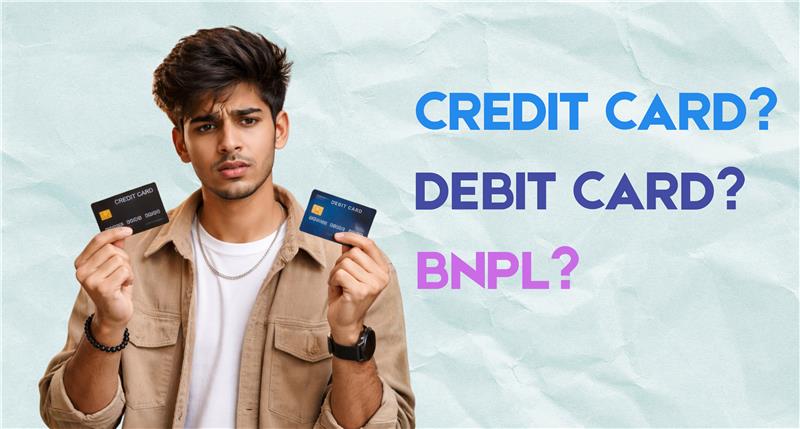
Ask any young Indian how they pay for things today, and the answer is rarely simple. It’s not just cash or card anymore. It’s: Debit for daily spends Credit for bigger purchases BNPL for “I’ll deal with it later” moments But when it comes to safety, most people are asking the wrong question. It’s not which option is best. It’s which option keeps you in control without long-term damage. Let’s break it down, using data, not judgment.
Ask any young Indian how they pay for things today, and the answer is rarely simple. It’s not just cash or card anymore. It’s: Debit for daily spends Credit for bigger purchases BNPL for “I’ll deal with it later” moments But when it comes to safety, most people are asking the wrong question. It’s not which option is best. It’s which option keeps you in control without long-term damage. Let’s break it down, using data, not judgment.
What do we mean by “safer”?
Before comparing tools, we need to define safety.
In real life, financial safety means:
You don’t spend more than you can repay
One mistake doesn’t spiral into long-term stress
You know where your money is going
Your future options (like credit access) aren’t quietly damaged
With that lens, let’s look at each option.
Debit Cards & UPI: The Illusion of Safety
Debit is often seen as the safest option because:
“You’re only spending your own money.”
And that’s true to an extent.
Why debit feels safe
No borrowing
No interest
No future obligation
In India, debit spending is largely powered by UPI under NPCI, which has made payments instant, invisible, and frictionless.
The hidden risk
Data from consumer behaviour studies shows that people spend more when payments feel effortless. When there’s no pause, spending doesn’t feel like spending.
That’s why:
Small UPI transactions pile up quickly
Monthly overspending often happens without awareness
People don’t realise they’re off-budget until the balance drops
Debit is low risk for debt, but high risk for mindless spending if there are no limits or visibility.
Verdict:
Debit is safe for debt, but not automatically safe for budgets.
Credit Cards: Powerful, but Punishing
Credit cards are misunderstood in both directions.
Some fear them completely. Others use them casually.
The truth lies in between.
Why credit can be useful
Interest-free periods (if paid on time)
Consumer protection
Helps build credit history
In fact, regulated credit products are overseen by the Reserve Bank of India, which sets rules around billing cycles, disclosures, and user protection.
Where credit becomes dangerous
The risk isn’t the card, it’s revolving debt.
Indian lending data consistently shows:
Missed credit card payments attract high interest
Minimum-due payments keep users stuck in cycles
One late payment can impact your credit score for years
And here’s the critical insight:
Credit cards assume financial predictability.
Gen Z and young professionals often don’t have that yet.
Verdict:
Credit is safe only if you’re disciplined, predictable, and pay in full, every single month.
BNPL: The Most Misunderstood Option
Buy Now, Pay Later (BNPL) feels harmless because:
No card
No visible interest
Instant approval
That’s exactly why it’s risky.
Why BNPL feels safer than it is
Payments are delayed, not denied
The cost is emotionally disconnected from the purchase
Multiple BNPL plans can run simultaneously
Industry data shows that many young users lose track of how many BNPL obligations they have, because repayments are split, staggered, and easy to forget.
The real risk
Missed BNPL payments still attract penalties
Some BNPL defaults are reported to credit bureaus
Users often stack BNPL unknowingly
BNPL isn’t unsafe by design, but it’s unsafe when used without visibility or limits.
Verdict:
BNPL is safe for planned, short-term use, but risky for impulse spending.
So… which one is actually safer?
Here’s the honest answer most blogs won’t give you:
No payment method is inherently safe.
Control is what makes it safe.
Payment Method | Debt Risk | Overspending Risk | Long-Term Impact |
|---|---|---|---|
Debit / UPI | Low | Medium-High | Low |
Credit Card | High | Medium | High |
BNPL | Medium | High | Medium-High |
What Gen Z actually needs (but rarely gets)
Most financial tools assume:
Perfect discipline
Stable income
Strong memory
But Gen Z lives in a world of:
Variable expenses
Digital-first payments
Lifestyle inflation
That’s why safety today looks like:
Spending limits instead of blind access
Visibility instead of tracking spreadsheets
Guardrails instead of guilt
The smarter way to think about “safe spending”
Instead of asking:
“Should I use debit, credit, or BNPL?”
Ask:
Do I know my monthly limit?
Will this decision affect future me?
Do I have clarity, not just convenience?
The safest financial behaviour isn’t avoiding tools.
It’s using tools that prevent regret.
Final takeaway
Debit protects you from debt, but not from overspending.
Credit helps you grow, but punishes mistakes.
BNPL offers flexibility, but hides risk.
Safety isn’t about the payment method.
It’s about how much control you have when you use it.
And for Gen Z, the future of finance isn’t more credit.
It’s smarter boundaries, clearer spending, and systems that work even on imperfect days.
What do we mean by “safer”?
Before comparing tools, we need to define safety.
In real life, financial safety means:
You don’t spend more than you can repay
One mistake doesn’t spiral into long-term stress
You know where your money is going
Your future options (like credit access) aren’t quietly damaged
With that lens, let’s look at each option.
Debit Cards & UPI: The Illusion of Safety
Debit is often seen as the safest option because:
“You’re only spending your own money.”
And that’s true to an extent.
Why debit feels safe
No borrowing
No interest
No future obligation
In India, debit spending is largely powered by UPI under NPCI, which has made payments instant, invisible, and frictionless.
The hidden risk
Data from consumer behaviour studies shows that people spend more when payments feel effortless. When there’s no pause, spending doesn’t feel like spending.
That’s why:
Small UPI transactions pile up quickly
Monthly overspending often happens without awareness
People don’t realise they’re off-budget until the balance drops
Debit is low risk for debt, but high risk for mindless spending if there are no limits or visibility.
Verdict:
Debit is safe for debt, but not automatically safe for budgets.
Credit Cards: Powerful, but Punishing
Credit cards are misunderstood in both directions.
Some fear them completely. Others use them casually.
The truth lies in between.
Why credit can be useful
Interest-free periods (if paid on time)
Consumer protection
Helps build credit history
In fact, regulated credit products are overseen by the Reserve Bank of India, which sets rules around billing cycles, disclosures, and user protection.
Where credit becomes dangerous
The risk isn’t the card, it’s revolving debt.
Indian lending data consistently shows:
Missed credit card payments attract high interest
Minimum-due payments keep users stuck in cycles
One late payment can impact your credit score for years
And here’s the critical insight:
Credit cards assume financial predictability.
Gen Z and young professionals often don’t have that yet.
Verdict:
Credit is safe only if you’re disciplined, predictable, and pay in full, every single month.
BNPL: The Most Misunderstood Option
Buy Now, Pay Later (BNPL) feels harmless because:
No card
No visible interest
Instant approval
That’s exactly why it’s risky.
Why BNPL feels safer than it is
Payments are delayed, not denied
The cost is emotionally disconnected from the purchase
Multiple BNPL plans can run simultaneously
Industry data shows that many young users lose track of how many BNPL obligations they have, because repayments are split, staggered, and easy to forget.
The real risk
Missed BNPL payments still attract penalties
Some BNPL defaults are reported to credit bureaus
Users often stack BNPL unknowingly
BNPL isn’t unsafe by design, but it’s unsafe when used without visibility or limits.
Verdict:
BNPL is safe for planned, short-term use, but risky for impulse spending.
So… which one is actually safer?
Here’s the honest answer most blogs won’t give you:
No payment method is inherently safe.
Control is what makes it safe.
Payment Method | Debt Risk | Overspending Risk | Long-Term Impact |
|---|---|---|---|
Debit / UPI | Low | Medium-High | Low |
Credit Card | High | Medium | High |
BNPL | Medium | High | Medium-High |
What Gen Z actually needs (but rarely gets)
Most financial tools assume:
Perfect discipline
Stable income
Strong memory
But Gen Z lives in a world of:
Variable expenses
Digital-first payments
Lifestyle inflation
That’s why safety today looks like:
Spending limits instead of blind access
Visibility instead of tracking spreadsheets
Guardrails instead of guilt
The smarter way to think about “safe spending”
Instead of asking:
“Should I use debit, credit, or BNPL?”
Ask:
Do I know my monthly limit?
Will this decision affect future me?
Do I have clarity, not just convenience?
The safest financial behaviour isn’t avoiding tools.
It’s using tools that prevent regret.
Final takeaway
Debit protects you from debt, but not from overspending.
Credit helps you grow, but punishes mistakes.
BNPL offers flexibility, but hides risk.
Safety isn’t about the payment method.
It’s about how much control you have when you use it.
And for Gen Z, the future of finance isn’t more credit.
It’s smarter boundaries, clearer spending, and systems that work even on imperfect days.